Flood Control · Public Safety Resource
Emergency and non-emergency contacts, sandbag locations, flood safety tips from FEMA, preparedness steps, flood maps and flood insurance information for Tehama County residents.
In case of emergency, call 911. For non-emergency issues, contact the appropriate agency listed below.
Emergency
If life or property is in immediate danger, call 911 first. For non-emergency issues, please contact the appropriate agency below.
Non-Emergency Contacts
2-1-1
Community Assistance
2-1-1 Tehama connects people with community services in Tehama County.
Sand & Sandbag Locations
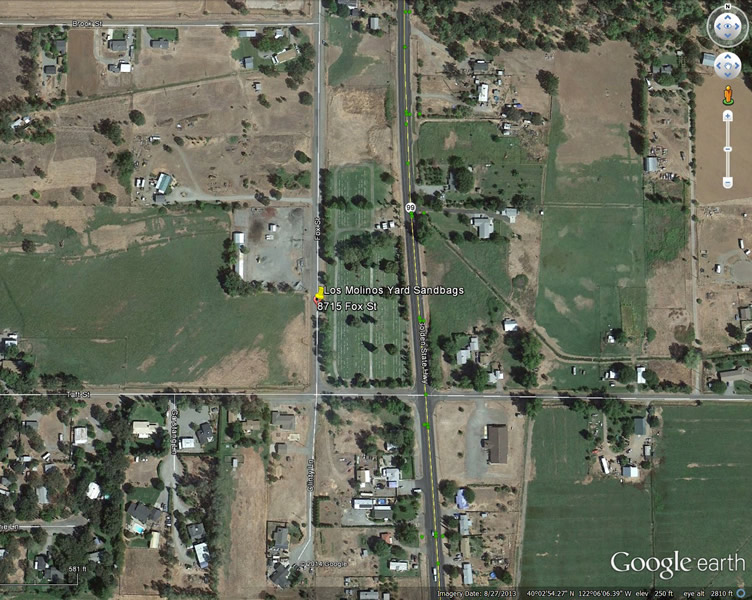
Tehama County Flood Control and Water Conservation District will make sand and sandbags available in limited quantities prior to large storm events that are predicted to cause flooding. Sand and sandbags can be purchased at several local hardware stores and landscape suppliers.
Citizens are encouraged to ‘only take what they need’ and to bring their own shovels to fill bags. While sandbags can be effective in emergency situations, citizens with repetitive flooding problems are encouraged to find more permanent solutions.
Availability Notice
Sand and sandbags are stocked only before large storm events that are predicted to cause flooding, and quantities are limited. Each location below shows its current stock status, updated by District staff when sand and sandbags are stocked at that site.
01
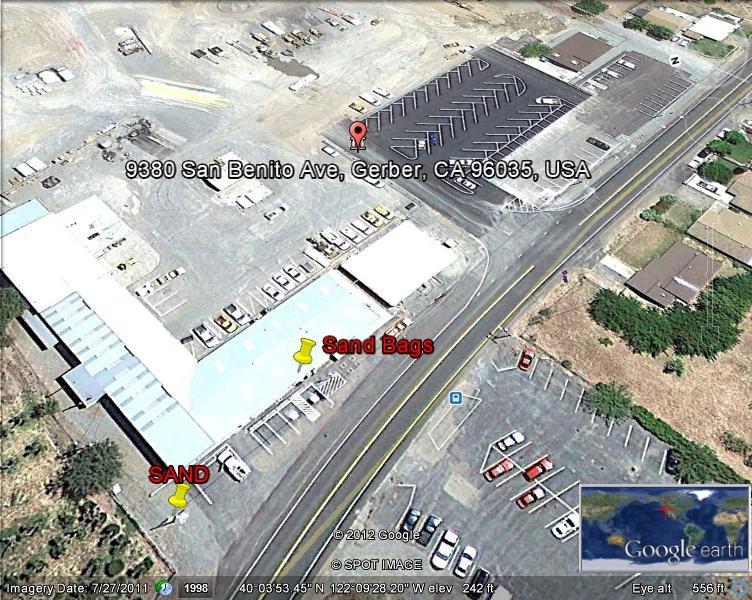
9380 San Benito Ave
Gerber, CA
Stock status:
No update posted
03
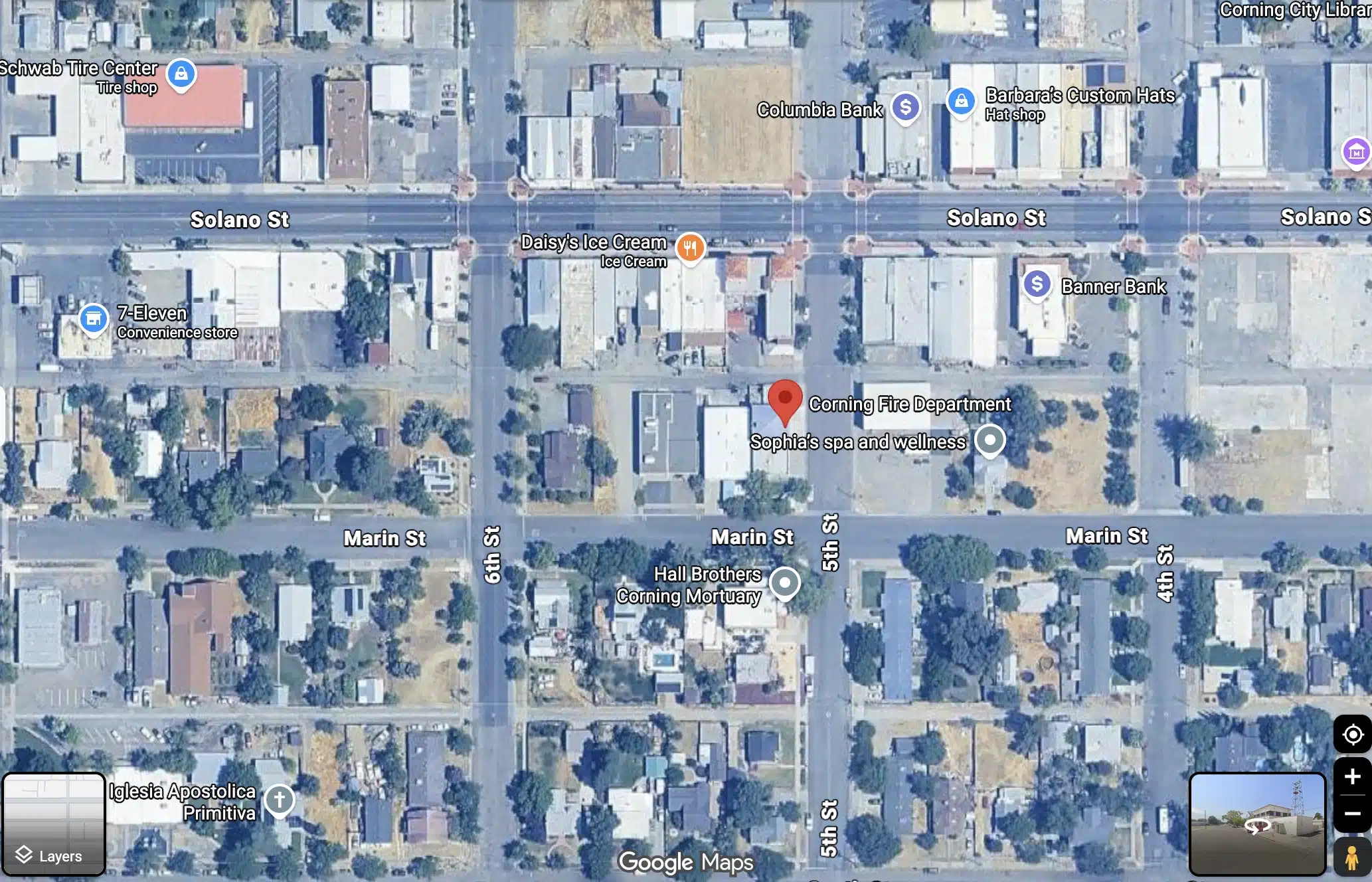
814 Fifth Street
Corning, CA 96021
Stock status:
No update posted
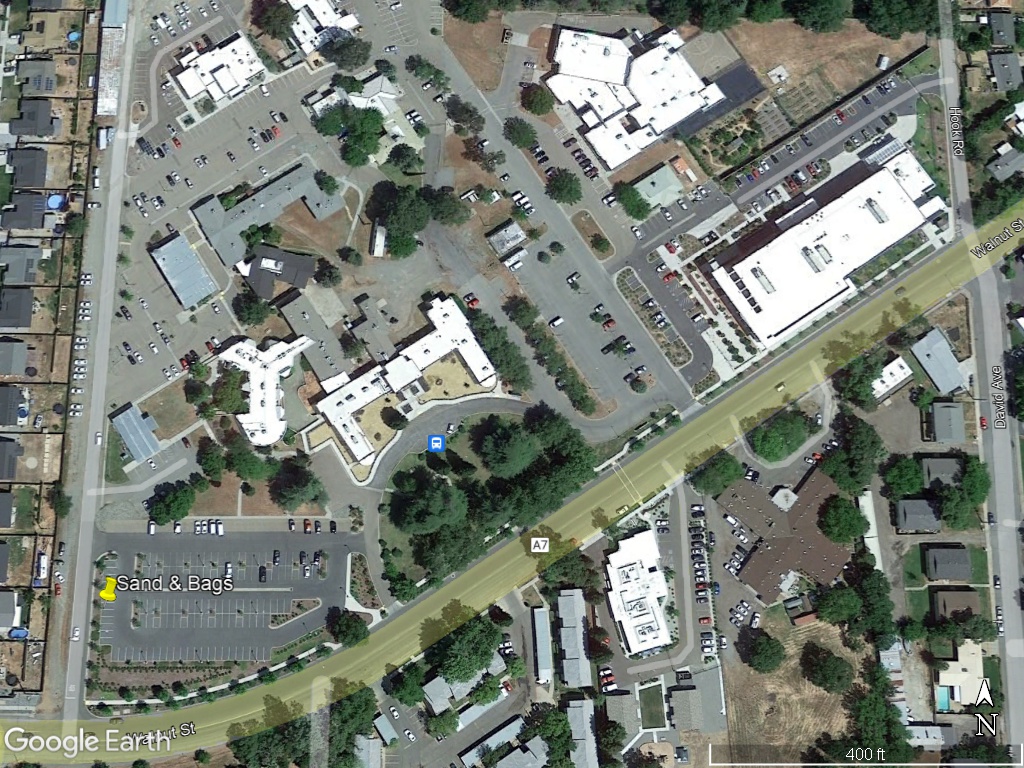
04
1830 Walnut Street
Red Bluff, CA
Stock status:
No update posted
Using sandbags is a simple, but effective way to avoid or reduce flood water damage. Properly filled and placed sandbags can act as a barrier to divert moving water around, instead of through, buildings. Sandbag construction doesn’t guarantee a water-tight seal, but is satisfactory to be used in most situations. Sandbags are also used successfully to avoid overtopping of streams with levees, and for training current flows to specific areas.
Protect Your Property
During the times of heavy rains, most damage to homes and property comes from flooded streets, particularly those with blocked drains. Be sure your gutters are clear of leaves and debris. Low curbs and sloping driveways also pose a problem. Your home can be protected by redirecting the water flow. Sandbag walls can be used to divert water or mud. Place the sandbag walls so they channel the water to a clear drain or gutter.
Remember: sandbags should not be stacked directly against the outer walls of a building, since, when wet, the bags may create added pressure on the foundation.
Technical Resources
FEMA
The official map of a community on which FEMA has delineated both the special hazard areas and the risk premium zones applicable to the community. The purpose of this page is to define a Flood Insurance Rate Map (FIRM), a commonly used term in floodplain management.
USDA
NRCS helps America’s farmers, ranchers and forest landowners conserve the nation’s soil, water, air and other natural resources. All programs are voluntary and offer science-based solutions that benefit both the landowner and the environment.
During & After a Flood
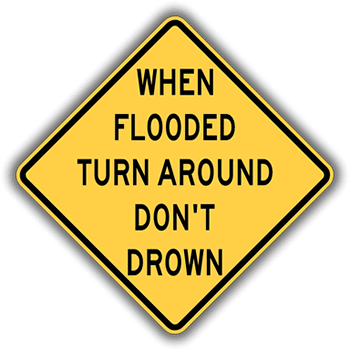
Ten safety rules to keep you and your family safe. Turn around, don’t drown — never walk or drive through flood water.
01
Six inches of water can knock you off your feet. Drowning is a major cause of flood deaths. Most of these drowning deaths occur during flash floods. Use a pole or stick to make sure that the ground is still there before you go through an area where the water is not flowing.
02
More people drown in their cars than anywhere else. If you come upon a road barrier, turn around and go another way; the road or bridge may be washed out.
03
Electrocution is also a major killer in floods. Electrical current can travel through water. Report downed power lines to our utility company or emergency manager.
04
Some appliances, such as television sets, can shock you even after they have been unplugged. Don’t use appliances or motors that have gotten wet unless they have been taken apart, cleaned, and dried by a professional.
05
Small animals that have been flooded out of their homes may seek shelter in yours. Use a pole or stick to poke and turn items over and scare away small animals.
06
After a flood, the ground and floors are covered with debris including broken bottles and nails. Floors and stairs that have been covered with mud can be very slippery.
07
Use a flashlight to inspect for damage. Don’t smoke or use candles, lanterns, or open flames unless you are sure that the gas has been turned off and the area has been aired out.
08
Use a generator or other gasoline-powered machines outdoors. The same goes for camping stoves. Fumes from charcoal are especially deadly – cook with charcoal only outdoors.
09
Floodwaters have picked up sewage and chemicals from roads, farms, factories, and storage buildings. Spoiled food and flooded cosmetics and medicine are health hazards. When in doubt, throw them out.
10
Recovering from a flood is a big job. It is tough on both the body and the spirit. And the effects a disaster has on you and your family may last a long time. Consult a health professional on how to recognize and care for anxiety, stress, and fatigue.
Before · During · After
1
Before a flood
2
During a flood
Safety is the most important consideration. Since floodwaters can rise very rapidly, you should be prepared to evacuate before the water level reaches your property.
Keep a battery powered radio tuned to a local station, and follow all instructions for your area. Be prepared to evacuate.
When outside the house, remember…FLOODS ARE DECEPTIVE. Avoid flooded roads, and don’t attempt to walk through floodwaters.
If, and only if, time permits, there are several precautionary steps that can be taken:
If it is safe to evacuate by car, you should consider the following:
3
After a flood
Insurance and safety first
Clean-up and drying
Flood Insurance & Long-Term Protection
Historical context: the Great Flood of ’93
In July of 1993 almost no one in the Midwest expected flooding, until the rain started falling – and didn’t stop. Rivers and streams, already swollen from heavy spring rains and snowmelt, rose rapidly to record flood levels. After two months, the Missouri and Mississippi rivers had surged through nine states, destroying homes, businesses and croplands in towns and cities across the Midwest. It was a summer no one in the Midwest will ever forget. The Great Flood of ’93 was the worst in U.S. history, causing 48 deaths, and an estimated $10.5 billion in damage to 45,000 homes and $6.5 billion to crops.
Devastating floods occur throughout the U.S. every year. Overdevelopment and leveling of forests have reduced the land’s natural ability to absorb excess water. So with little warning, heavy rains can bring disastrous floods – even if you don’t live near a river or stream.
Until the late 1960’s, most property owners were unable to get insurance against flood damage. Private insurance firms, aware of the potential for catastrophic losses, were unwilling to assume the financial risk alone. This put the burden on taxpayers to provide costly disaster relief to a growing number of flood victims.
In 1968, Congress addressed this issue by creating the National Flood Insurance Program (NFIP). This Federal program provided flood insurance at a reasonable cost in exchange for the careful management of flood-prone areas by local communities.
Today, the NFIP serves over 2 million policyholders in more than 18,000 communities across the country. It is administered by the Federal Emergency Management Agency (FEMA).
Losses due to flooding are not covered under most homeowners or business policies. No one, however, should be without financial protection from flood disaster. You can insure your home or business, and its contents, if your community is in the NFIP. to participate, a community must adopt and enforce floodplain management regulations to reduce future flood damage.
You can buy flood insurance in NFIP communities no matter where your home or business is located1. Even if you are in an area that is not considered to be flood-prone, it’s a good idea to have flood insurance. One-third of all NFIP claims come from outside high-risk flood areas.
To find out more about flood insurance and whether your community is participating, ask any licensed property agent or company – the same person who sells your home and auto policies.
1except in Coastal Barrier Resources areas (P.L. 97-348)
Note: The figures, premiums and program details below are historical information carried over from the original page. They are not current rates or verified policy terms – contact a licensed insurance agent or FEMA for current National Flood Insurance Program information.
There is a 30-day waiting period from the time a policy is purchased until you are covered, with the following exceptions:
Flood insurance is required by law to get Federally secured financing to buy, refinance, build, repair, reconstruct, or improve structures in special flood hazard areas of a participating community. This includes Federal grants, FHA and VA loans, as well as most conventional mortgage loans.
The NFIP not only covers flood losses to your building or contents, it also reimburses you for actions you take to prevent flood damage. For example, costs for removing insured contents to a safe location are reimbursed up to $500 with no deductible. Other costs, such as for sandbags, plastic sheeting and lumber, pumps, fill for temporary levees, and wood to save the building can also be reimbursed up to a limit of $750 with no deductible.
At a time when flooding causes more than $2 billion in property damage each year, you cannot afford to think that it will never happen to you. It can happen, and often when it’s least expected.
But you must act in advance. Call your insurance agent or company to purchase flood insurance today. For more information on steps you can take to prepare for and reduce flood damage, contact FEMA or the American Red Cross.
Keep These Handy
In case of emergency, call 911. Sand and sandbags are provided in limited quantities before large storm events — check the sandbag locations for current stock status.